
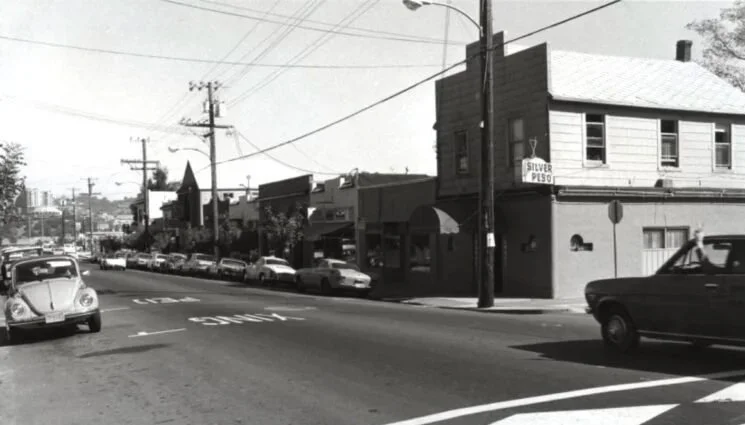
Silver Peso in 1975, photo courtesy of City of Larkspur
A New Meaning for “Dive” Bar: The Story Behind The Silver Peso
In February, Marin newspapers announced the sale of Larkspur’s Silver Peso saloon to the owners of Sam’s Anchor Café, a legendary bar and restaurant in Tiburon. Buried in copy about what will or will not change with the sale, was this sentence in the Marin I.J.: “It became the Silver Peso in 1961, when former Navy diver Chester Wolmack purchased the bar with money he earned salvaging silver coins from Manila Bay after World War II.”
Those words caught the eye of Tiburon numismatics (the study of coins) historian Dan Hipple. According to him, and based on writings of the U.S. Naval Institute, here’s his version of how Wolmack got his money — and Larkspur’s Silver Peso got its name:
“In 1941, as the Japanese were soon to occupy the Philippine Islands, U.S. forces moved 18 tons of silver pesos from the U.S. federal mint in Manila to Corregidor, the island fortress protecting Manila Bay. The plan was that then a U.S. submarine leaving the area would take the bounty to a friendlier location. But the sub was already loaded with goods being evacuated so they dumped the 14 to 17 million silver pesos in cloth bags and wooden boxes into Manilla Bay for safe keeping.
Then, following the fall of the Philippines, Japanese forces got wind of the submerged loot and ordered captured American divers to recover the pesos. But U.S. divers sabotaged the effort and recovered only about two million pesos and the Japanese halted the effort. In 1945, with the war ended, the U.S Navy recovered another five million pesos and then, for unknown reasons, that project was abandoned.
Jump ahead to 1947 when two American fortune-seekers got lucky on their last dive into Manila Bay and found 500,000 silver pesos in wooden boxes. Yet no U. S. Naval Institute records indicate who the two divers were, or what became of the money. Was one of them the late Chester Wolmack? When he bought the Larkspur bar in 1961 he claimed it was with money made recovering pesos from Manilla Bay and then he named the bar ‘Silver Peso.’ After a fair amount of reading on this subject, one might say Chester’s our man. He’s one of the two men who in 1947 made a lucky last dive.
by Jim Wood March 10, 2026 for MARIN MAGAZINE
THE BUILDING THAT houses the Silver Peso opened in 1905 as a blacksmith shop.
1930s - 1950s: The space transformed into a market and eventually opened as a tavern (originally called "Jim’s Tavern") in 1938.
The Silver Peso came into being after World War II when a former GI bought the building with — wait for it — silver pesos. The pesos were “recovered from Manila Bay after the GI learned the Philippine government had sunk its bank reserves to prevent them from falling into Japanese hands,” according to the Marin History Museum.
1960’s: The bar cemented its place in rock-and-roll lore when legendary singer Janis Joplin became a frequent patron and was rumored to have played the bar’s piano. The instrument, tucked inside the bar for years, is said to have been played by Joplin, the legendary singer who lived in Larkspur near the end of her life and has long been part of the Peso’s mythology. The story has helped turn the bar into more than a neighborhood watering hole. Courtesy of SF Chronicle
1970s–2000s: The Peso transitioned into a beloved blue-collar institution. It was known as an authentic "third space" in wealthy Marin County, housing pool leagues, pinball, and a fiercely loyal local crowd.
2026 and beyond: Aquired by Max Perry and Conor Flaherty who say they are “committed to restoring the beloved neighborhood staple to its fabled glory.”
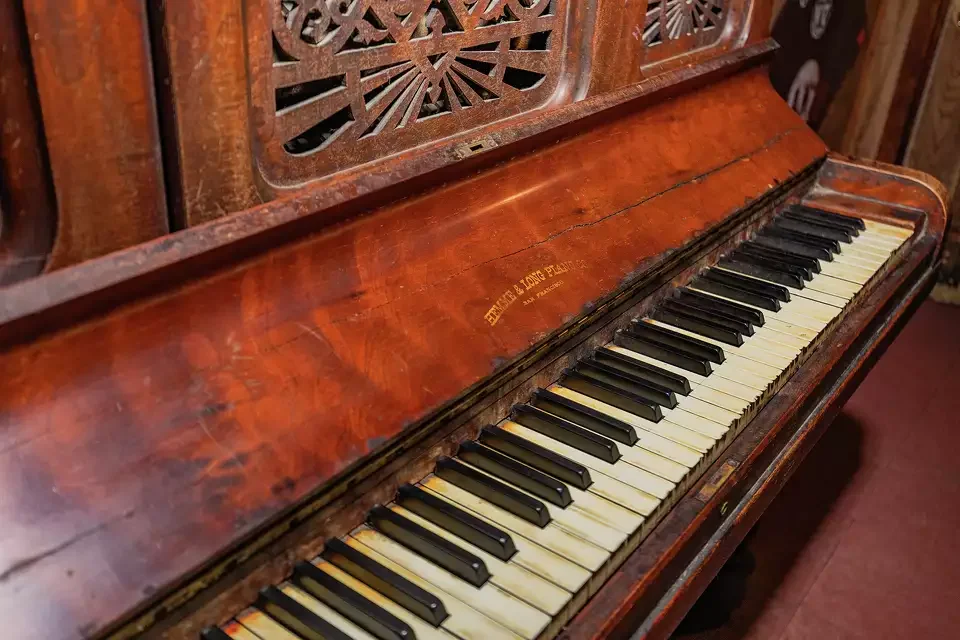
Janis Joplin once played this piano at Marin County’s Silver Peso in Larkspur, CA
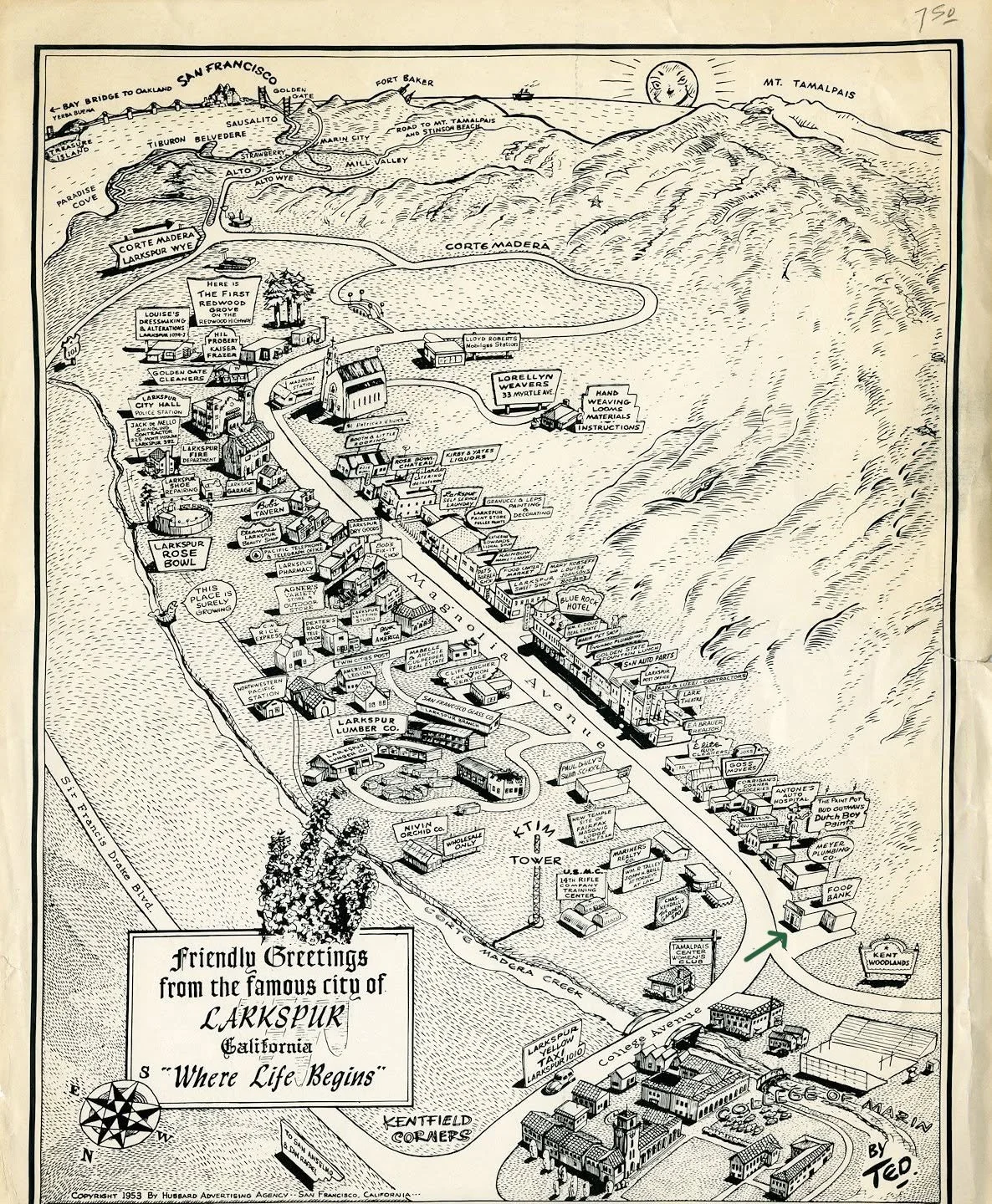
“Where Life Begins” Larkspur map circa 1953